
NC Family BuildingALLIANCE Join the Alliance
Protect family • Protect fertility

North Carolina families are building without a safety net.

Every North Carolinian who wants to build a family deserves the chance to do so. North Carolina has no insurance mandate for fertility care and no protective gestational carrier (i.e., surrogacy) statute. Our parentage law, written in 1971, hasn’t kept pace with modern medicine, leaving many families and children without clear legal protection.

In the 2025–26 session, legislators from both parties filed nine bills to protect access to IVF, expand insurance coverage, preserve fertility for cancer patients, and secure parentage for children born through assisted reproduction. Not one has moved out of committee.

Whether a family can grow shouldn’t depend on their income, their insurance, or where in the state they live. IVF and fertility care should be protected and within reach for every North Carolinian who needs it.

That’s why we’re building a statewide alliance bringing together patients, families, clinicians, scientists, and legal and policy professionals to protect family building in North Carolina. Join us.

No coverage law. North Carolina has no infertility insurance mandate and no IVF coverage requirement of any kind.

A window ahead. The 2027 long session is the next real opportunity. Groups that arrive organized get heard.

The gap

What it costs to build a family here

Every figure below is specific to North Carolina and sourced. We publish our sources because we expect to be checked.

$15–25kPER IVF CYCLE

Typical all-in cost in North Carolina, including roughly $5,000–$6,000 in medication. Nearly every family pays it out of pocket.

Duke Fertility Center self-pay pricing
3LIFETIME CYCLES

What the State Health Plan covers for teachers and state employees: three ovulation induction cycles without insemination. No IUI. No IVF.

NC State Health Plan 2025 benefit booklets
1971LAST WRITTEN

The year NC's donor-conception parentage statute was enacted. It covers artificial insemination only, and only for a married couple.

N.C.G.S. § 49A-1

Care exists, but only in three metros

North Carolina had 11 reporting fertility clinics in the most recent CDC state data, concentrated in the Triangle, Charlotte, and the Triad. For families outside those corridors, treatment means repeated early-morning drives for monitoring appointments that can't be rescheduled or done locally. That burden falls hardest on people who can't take flexible time off.

CDC, State-Specific ART Surveillance

Fewer NC families reach care than the national average

1.9% of North Carolina infants were born through assisted reproductive technology, against 2.3% nationally. That gap reflects who can pay for care, not who needs it.

CDC, 2021 state data brief

Surrogacy runs on custom, not law

North Carolina has no surrogacy statute. Gestational carrier arrangements proceed because nothing forbids them, and pre-birth parentage orders are granted at the discretion of county courts. Whether a family gets one can depend on which county they file in and whether donor gametes were used.

What we do

What the Alliance is being built to do

We're organizing now so that the 2027 long session opens with a constituency already in place.

Organize NC providers

Reproductive endocrinologists, embryologists, andrologists, nurses, genetic counselors, and mental health professionals from fertility practices across the state. Clinicians see firsthand what patients face, and we want that expertise working alongside patient advocates in every conversation with lawmakers.

Give legislators the evidence

Plain-language briefs on cost, access, and actuarial impact, built from North Carolina data rather than national talking points. Every claim sourced, every source public.

Connect families to their legislators

Nothing persuades a legislative office like a constituent from the member's own district. We're building the map that makes those introductions possible.

Cover the whole path to parenthood

Infertility care, LGBTQ+ family building, donor conception, surrogacy, and adoption share the same legal gaps in North Carolina. They're stronger argued together.

Who we are

Founded at the bench, the bedside, and the bar

We met as 2026 PRIMED Scholars, the policy advocacy training program of the American Society for Reproductive Medicine's Center for Policy and Leadership. PRIMED (Preparing Experts in Reproductive Medicine to Engage Decisionmakers) trains clinicians and scientists to work directly with lawmakers. We come to North Carolina's gaps from the lab, the clinic, and the law, and we reached the same conclusion about what's missing.

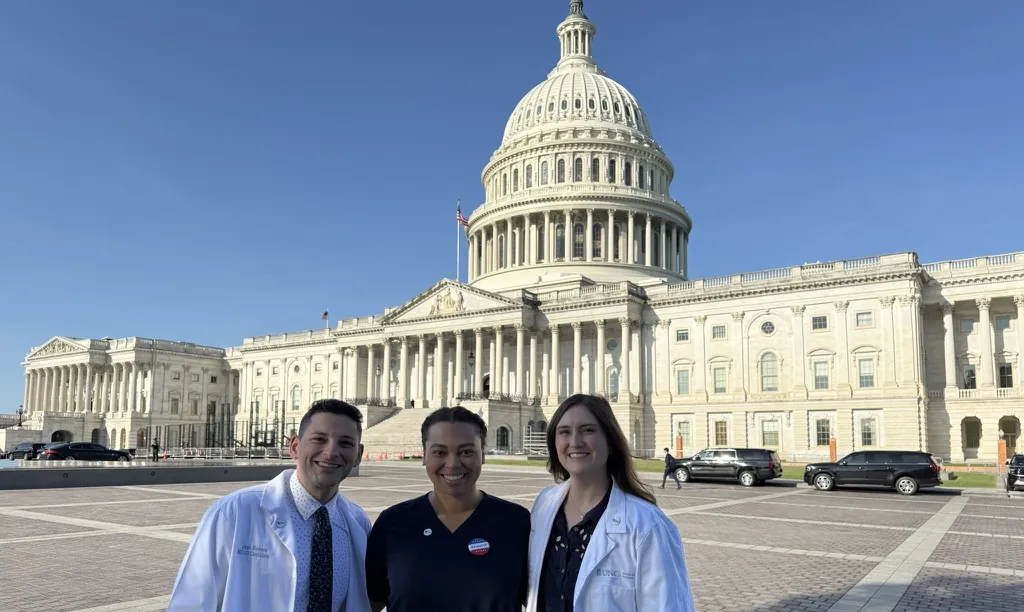
Alease Barnes, Kendall Bielak, and Josh Romero standing in front of the U.S. Capitol
The founders at the U.S. Capitol in Washington, D.C.
Alease Barnes

Alease Barnes

Embryologist · Co-founder

Alease Barnes is a clinical embryologist with nearly a decade of experience in IVF laboratories across the country. Born and raised in North Carolina, she earned her degree in genetics at NC State University before beginning her career in the lab. Her work centers on the earliest days of development, from fertilization through embryo culture and cryopreservation, and gives her a close view of how cost and coverage shape the choices patients can make. Outside the lab, she educates a broad audience about embryology and fertility care through social media. Now based back home in North Carolina, she is a 2026 PRIMED Scholar with ASRM's Center for Policy and Leadership.

Kendall Bielak

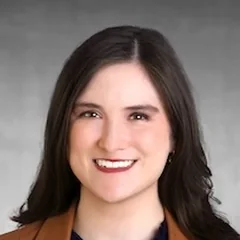
Kendall Bielak, MD

REI Fellow · Co-founder

Dr. Kendall Bielak is a Reproductive Endocrinology and Infertility fellow at UNC and co-founder of the NC Family Building Alliance. Her advocacy began with the 2017 Women's March and grew during residency, where she represented Delaware as an ACOG Junior Fellow. She lobbied in Washington and Dover and met with legislators on family planning and Medicaid access. She now continues this work through ASRM's PRIMED program. Dr. Bielak believes the laws that most affect patients' access to care are written in state legislatures. She is working to make North Carolina a state that requires inclusive fertility coverage for single parents by choice, LGBTQ+ families, and egg freezing for fertility preservation.

Josh Romero

Josh Romero

MD/JD Candidate · Co-founder

Josh Romero is a fifth-year MD-JD candidate at the University of North Carolina at Chapel Hill who hopes to pursue residency in OB/GYN and fellowship training in reproductive endocrinology and infertility. His work focuses on the intersections of health care and policy. He is a PRIMED Scholar and former policy extern with the American Society for Reproductive Medicine's (ASRM) Center for Policy & Leadership, where he worked on developing gestational carrier and intended parentage guidance for ASRM members and lawmakers. He plans to couple his education in medicine and law to advocate for patients, protect physicians providing evidence-based care, and increase access to family building.

Join the Alliance

Membership is free. It's also the whole point.

An alliance's power is the number and spread of people it can credibly speak for. Adding your name, and your ZIP code, changes what we can say in a legislative office.

Clinicians and lab professionals. REIs, embryologists, andrologists, nurses, counselors. Your voice carries furthest.

Patients and families. Anyone who has built a family in North Carolina, tried to, or is trying now.

Practices and organizations. Clinics, employers, faith communities, and advocacy groups willing to be listed as partners.

Attorneys and policy people. Family formation, ART, insurance, and health policy.

I'm open to sharing my family-building story with legislators or press.
I'm willing to contact my own state legislator when it matters.

We ask for your ZIP because legislative districts follow geography, not county lines. We will never sell, share, or publish your information. No dues, ever. For updates between emails, follow us on Instagram at @NCFamilyBuildingAlliance.

Contact

Press, partnerships, and policy questions

For media inquiries, legislative staff requests, partnership proposals, or questions about our data and sources.

Email us directly:info@NCFamilyBuildingAlliance.org

Follow us on Instagram:@NCFamilyBuildingAlliance

We can't give medical or legal advice about your individual situation. For clinical questions, contact your care team. For legal questions, consult an NC-licensed attorney.

Please don't include personal medical details in this form.

Where we stand

North Carolina’s family-building legislation

During the 2025–26 session, North Carolina legislators introduced bills addressing fertility access, insurance coverage, preservation, parentage, and personhood at fertilization. We support five bills below that would expand access or strengthen protections for patients and families, and we support four more if they are amended to close gaps that could leave patients or families behind. We oppose H 1232’s proposed constitutional personhood at fertilization.

As of October 6, 2026, the official histories of these ten bills show no committee reports or floor votes on passage. The 2025 Regular Session has not adjourned sine die, but its remaining reconvened sessions are limited to specified matters, so most of these bills are unlikely to move before the session ends.

SupportSupport with amendmentsOppose
H 76
Support with amendments
Filed February 10, 2025

Protect Access to In Vitro Fertilization

Would bar the State and local governments from prohibiting, unreasonably limiting, or interfering with a patient’s access to assisted reproductive technology (ART), or with a provider’s ability to share evidence-based information about ART or to perform it. It protects access without requiring insurance coverage.

Requested amendments

We support this bill’s goal of protecting IVF access and ask that it be amended to cover intrauterine insemination (IUI), donor insemination, and sperm banking, and to state expressly that an embryo outside the uterus (i.e., extrauterine embryo) is not a person under state law.

Primary sponsors
Cotham, Campbell, Paré, Schietzelt
Status
Referred to House Rules on February 11, 2025. No subsequent action recorded.
H 473 & S 383
Support
Both filed March 20, 2025

Right to IVF

These companion bills would establish the same ART access protections as H 76. They would also expressly provide that a fertilized egg or embryo outside the uterus is not an unborn child, a natural person, or any other term connoting a human being under state law. Both would appropriate $500,000 in recurring funds for each year of the 2025–27 biennium to Medicaid maternal support services (the Baby Love Program), drawing down $913,000 in matching federal funds each year.

Primary sponsors
H 473: Helfrich, Cohn, Pittman, Prather
S 383: Bradley, Grafstein, Everitt
Status
Referred to their respective chambers’ Rules committees on March 24, 2025. No subsequent action recorded.
S 572
Support
Filed March 25, 2025

Greater Access to Fertility Medication

Would apply to health plans that already cover any fertility treatment. In those plans, limits on ovulation medication could be no stricter than limits on other prescription drugs, and annual or lifetime caps on ovulation medication and in-network ovulation induction cycles would be barred. It does not require any plan to cover fertility treatment.

It would also direct the State Health Plan to remove annual and lifetime limits on ovulation medication and in-network ovulation induction cycles. It would appropriate $300,000 in recurring funds for 2025–26 and $600,000 for 2026–27 to cover the State Health Plan’s added costs.

Primary sponsor
Murdock
Status
Referred to Senate Rules on March 26, 2025. No subsequent action recorded.
H 635
Support with amendments
Filed March 31, 2025

Increase Access to Fertility Treatment

Would require large-group health plans to cover fertility diagnostic care, treatment, and preservation, including at least three IVF cycles, consistent with ASRM guidelines. Plans offered by religious institutions and self-insured group plans would be exempt.

Requested amendments

We support this bill and ask that it be amended to define a covered IVF cycle by egg retrieval without limiting embryo transfers, to define “licensed healthcare facility” so that office-based fertility care is included, and to add nondiscrimination protections based on marital status, sexual orientation, and gender identity.

Primary sponsors
T. Brown, Cotham, Helfrich, Charles Smith, with 18 additional sponsors
Status
Referred on April 2, 2025 to Health, followed by Insurance, Finance, and Rules if favorable. The Finance referral was removed on April 17, 2025. No committee report or subsequent action recorded.
H 744
Support with amendments
Filed April 2, 2025

Fertility Preservation Pilot Program

Would appropriate $2.25 million in nonrecurring funds for each year of the 2025–27 biennium, awarded in equal grants to fertility preservation programs at Duke, UNC Chapel Hill, and Atrium Health Levine Cancer Center. The pilot, running through June 30, 2032, would help patients whose fertility is threatened by cancer or its treatment pay for preservation, storage, and later IVF or intrauterine insemination (IUI).

Eligible patients are those who are uninsured, underinsured, or facing more than $1,000 in out-of-pocket costs. Assistance is capped at $12,000 for egg retrieval and storage, $1,500 for sperm retrieval and storage, and $26,000 for later IVF or IUI.

Requested amendments

We support this pilot and ask that it be amended to set assistance caps by procedure (egg or sperm retrieval) rather than by sex.

Primary sponsors
Campbell, Cotham, Schietzelt
Status
Referred to House Appropriations, followed by Rules if favorable, on April 3, 2025. No subsequent action recorded.
S 793
Support
Filed April 21, 2026

Right to IVF

A 2026 version of S 383. Its ART access protections, embryo non-personhood provision, and construction clause are word-for-word identical to S 383. It differs in three ways: it is codified as a new Article 1Q rather than Article 1O; Senator Bradley is its sole sponsor; and its Baby Love Program appropriation of $500,000 in recurring funds begins in 2026–27 (rather than in each year of the 2025–27 biennium), drawing down $900,000 in matching federal funds (rather than $913,000 each year).

Primary sponsor
Bradley
Status
Referred to Senate Rules on April 22, then re-referred to Appropriations/Base Budget on April 23, 2026. No subsequent action recorded.
S 910
Support
Filed April 29, 2026

Expanding Insurance Coverage/Fertility Care

Would require any health benefit plan that provides pregnancy-related benefits, including the State Health Plan, to cover fertility diagnosis and treatment. Required coverage includes:

  • at least four completed egg retrievals
  • unlimited embryo transfers
  • unlimited intrauterine insemination
  • fertility preservation for patients whose medical condition or treatment threatens their fertility

The bill adopts an inclusive definition of infertility and bars higher cost-sharing and waiting periods for fertility care. It also prohibits coverage discrimination based on marital status, sexual orientation, gender identity, disability, and other protected characteristics.

It would also direct the state to seek federal approval for Medicaid coverage of fertility diagnostic care, ovulation-enhancing drugs, and IUI, with $45 million in recurring funding. It would fund a statewide fertility care resource hub and a disparities study, and require licensing boards to offer family-building education.

Finally, it would establish a statutory right to provide, receive, and use both ART and contraception in North Carolina.

Primary sponsors
Murdock, Chitlik, Salvador
Status
Referred to Senate Rules, then re-referred to Appropriations/Base Budget, on April 30, 2026. No subsequent action recorded.
S 911
Support with amendments
Filed April 29, 2026

Protect Children Born from Fertility Care Act

Would modernize North Carolina’s parentage law for children conceived through assisted reproduction, including IVF and egg, sperm, and embryo donation. An individual who consents to assisted conception with the intent to be a parent would be the child’s legal parent. Consent can be shown through a signed record or a pre-pregnancy agreement. Without either, a court may still find consent if the individual lived with the child and openly held the child out as their own during the child’s first two years.

It would also create a civil remedy when a provider or institution knowingly uses the provider’s own reproductive material without the patient’s knowledge and consent. The patient, the child, or the child’s parent could recover $50,000 in liquidated damages plus treatment costs and attorneys’ fees.

Affected children would have until five years after turning 18 to sue. The bill would also temporarily revive claims already barred by the statute of limitations, and it funds $100,000 in public education.

Requested amendments

We support this bill’s goals and ask that it be amended to state expressly that donors are not legal parents, to add a separate gestational-carrier (i.e., surrogacy) framework that protects both intended parentage and the carrier’s bodily autonomy, and to preserve traditional tort remedies while clarifying filing deadlines and repose for claims involving unauthorized, unconsented use of sperm, eggs, or embryos.

Primary sponsor
Murdock
Status
Referred to Senate Rules, then re-referred to Appropriations/Base Budget, on April 30, 2026. No subsequent action recorded.
H 1232
Oppose
Filed May 13, 2026

Const. Amend./Life at Fertilization

Would ask voters to amend the state constitution to recognize legal personhood from fertilization (i.e., including an embryo or fertilized egg) until natural death. Anyone who willfully seeks to destroy, or destroys, the life of another person “at any stage of life” would face attempted-murder or first-degree-murder liability. It would also grant a right to use deadly force to defend the life of another person (i.e., including an embryo, fertilized egg, or fetus), at any stage, from willful destruction.

Why we oppose it

We oppose this proposal because extending personhood, homicide liability, and a deadly-force defense to embryos will threaten fertility care and patients’ decisions about embryos created through IVF treatment.

Primary sponsor
Kidwell
Status
Referred to House Rules on May 14, 2026. No subsequent action recorded.
What the record shows

Support for family building in North Carolina has come from both parties. Republican legislators led H 76 and H 744, Democratic legislators led S 910, and H 635 drew sponsors from both parties. None of these bills reached a committee report or a floor vote. The interest is there. What has been missing is a sustained, organized constituency behind it.

Legislative status reflects the individual bill histories. Those histories alone do not establish whether hearings occurred or whether related provisions advanced in other legislation.